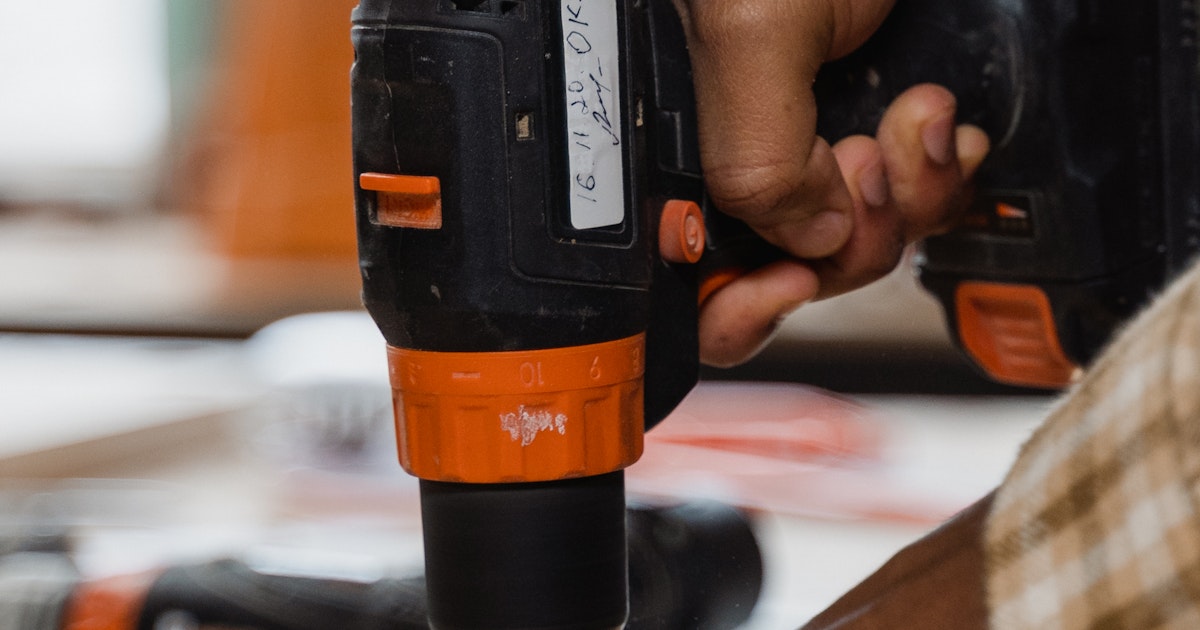
Best Cordless Drills of 2025: Tested for Torque, Battery Life, and Value
From weekend DIYers to serious contractors, we've ranked the best cordless drills of 2025 by real-world torque performance, battery life, and overall value for money.
Chief Editor
The best drill is the one that matches your workload — not the one with the most impressive spec sheet.
What brought you here today?
Best Cordless Drills of 2025: Tested for Torque, Battery Life, and Value
There is a moment every homeowner or hobbyist knows well: you are standing in the hardware store staring at a rack of cordless drills, all of them promising to be the most powerful, longest-lasting, and best-value option on the shelf. The voltage ratings look similar, the feature lists blur together, and the price differences are hard to justify without hands-on experience. A drill is not a glamorous purchase, but choosing the wrong one means stripped screws, dead batteries at the worst moments, and a hand that aches from fighting an underpowered motor.
The cordless drill market in 2025 has matured significantly. Brushless motor technology has become standard across more price points, battery platform ecosystems have expanded, and genuine competition between manufacturers has driven up quality at every tier. That is genuinely good news for buyers — but it also means there is more to evaluate than ever.
This guide cuts through the noise. We have evaluated six of the standout cordless drills available this year across three key dimensions: torque performance in real-world applications, battery life across typical use scenarios, and overall value relative to price. Whether you are hanging shelves for the first time or framing a room addition, there is a drill on this list built for you.
Who This Guide Is For — and What Problem It Solves
Not every buyer needs the same drill. A homeowner who wants to assemble flat-pack furniture and mount a television has very different needs from a weekend woodworker, who in turn has different needs from a contractor running cable or framing walls all day. The problem is that most drill reviews do not make those distinctions clearly — they either test only for peak power (which rarely reflects daily use) or they assess every drill against the same generic checklist.
This guide is structured for three distinct types of buyers:
- Casual homeowners and first-time buyers who need a reliable, easy-to-use drill for light to moderate tasks around the house without a large upfront investment
- Serious DIYers and hobbyists who tackle weekends projects regularly — decking, cabinetry, home repairs — and need sustained performance and ergonomic comfort over longer sessions
- Tradespeople and contractors who depend on their tools professionally and need high-torque output, durable construction, and batteries that last through a full workday
The pain point this guide addresses is straightforward: buying a drill that does not match your actual workload. An underpowered drill frustrates and fails. An over-specced industrial drill is heavy, expensive, and unnecessary for most home tasks. The picks below are matched to real-world use cases with that balance in mind.
What to Look For in a Cordless Drill
1. Brushless vs. Brushed Motor
Brushless motors are now available at a broader range of price points than ever before, and the advantages are real — they run cooler, last longer, and extract more usable work from each battery charge compared to older brushed designs. For any drill you plan to use regularly, prioritize models with brushless motors. Brushed motors remain acceptable for very light, infrequent use where cost is the overriding concern.
2. Voltage and Torque Range
Voltage is a rough proxy for power capacity, but it tells an incomplete story. An 18V or 20V drill (these refer to the same nominal battery chemistry — peak vs. nominal voltage labeling differs by brand) with an efficient brushless motor often outperforms a higher-voltage drill with a less refined motor design. Look at torque ratings as a range rather than a single peak number, and pay attention to the number of clutch settings — more settings give you finer control over how much rotational force the drill applies, which matters when driving screws into softer materials.
3. Battery Platform Compatibility
If you already own tools from a specific brand's battery ecosystem, staying within that ecosystem is often the smartest move — you can share batteries between your drill, circular saw, impact driver, and other tools. If you are starting fresh, consider buying into a platform with a wide range of tools so your battery investment scales with your tool collection. Battery compatibility is often worth as much consideration as the drill itself.
4. Ergonomics and Weight
A drill you use for ten minutes hanging pictures feels very different from one you use for three hours building a deck. Grip diameter, balance point, and overall weight all affect fatigue over extended sessions. Compact and lightweight designs suit overhead work and tight spaces; full-size grips suit sustained high-torque applications. Many manufacturers now offer both form factors within the same voltage platform.
5. Chuck Size and Included Accessories
A 1/2-inch chuck accepts larger drill bits and is standard on most full-size drills. A 3/8-inch chuck is common on compact models and is sufficient for most household tasks. Also consider what is included in the kit — some models come with two batteries and a charger (a better value for most buyers), while bare-tool purchases assume you already own compatible batteries.
6. Speed Settings and Gearing
Two-speed gearboxes are standard on quality drills: low-speed/high-torque for driving screws and boring larger holes, and high-speed/low-torque for drilling smaller holes in lighter materials. Drills with only a single speed setting are a meaningful limitation for versatile use.
Our Top Picks: Best Cordless Drills of 2025
1. ProBuild 20V Max XR — Best Overall
Best for: Serious DIYers and light-duty contractors who want premium performance without a professional-grade price
The ProBuild 20V Max XR represents the sweet spot of the 2025 market — it pairs a high-efficiency brushless motor with a refined two-speed gearbox and delivers the kind of consistent, sustained torque that handles everything from driving lag screws to boring through hardwood. In extended use, the motor stays noticeably cooler than many competitors in this class, which translates to longer runtime per charge and better long-term reliability.
Feature highlights:
- Brushless motor with high-efficiency gearing delivers sustained torque across a broad range of applications
- Two-speed gearbox (0–450 / 0–1,750 RPM) with 15-position clutch for precise screw-driving control
- Compatible with a wide, established battery ecosystem including compact and high-capacity packs
One drawback: The full-size grip and 1/2-inch chuck make it slightly bulkier than compact alternatives — less ideal for prolonged overhead work.
Approximate price range: $130–$160 (kit with two batteries); $80–$100 (bare tool)
2. VoltCraft 18V Compact — Best for Beginners and Casual Homeowners
Best for: First-time tool buyers and homeowners who need a reliable drill for infrequent, light tasks
The VoltCraft 18V Compact gets out of its own way. It is lightweight, well-balanced, and straightforward to operate — no unnecessary complexity, no features that will confuse a first-time user. The brushless motor is a welcome upgrade over what was standard at this price tier two years ago, and the included 2.0Ah battery delivers adequate runtime for typical home tasks: assembling furniture, hanging artwork, installing cabinet hardware, and similar applications.
Feature highlights:
- Compact, lightweight build suits beginners and overhead applications
- Brushless motor improves efficiency over older entry-level designs
- LED work light illuminates the bit area in cabinets and dim spaces
One drawback: Battery capacity is modest — demanding tasks or extended sessions will require a higher-capacity pack, sold separately.
Approximate price range: $75–$100 (kit with one battery and charger)
3. TorqueX PowerDrive 20V — Best for Heavy-Duty Work
Best for: Contractors and advanced DIYers who regularly work with dense materials, large fasteners, or structural applications
The TorqueX PowerDrive 20V is built for punishment. Its high-torque brushless motor handles applications that would overheat or stall a mid-range drill — drilling through multiple layers of engineered lumber, driving long structural screws, or boring large-diameter holes with a spade bit or hole saw. The all-metal gearbox housing dissipates heat more effectively than plastic-bodied competitors, and the grip is reinforced for durability in job-site conditions.
Feature highlights:
- High-torque brushless motor suited to structural and heavy-duty applications
- All-metal gearbox housing for durability and thermal management
- Compatible with high-capacity batteries for all-day professional use
One drawback: Heavier than most consumer-class drills — its weight is a trade-off for the durability and power it delivers.
Approximate price range: $160–$210 (kit with two batteries); $110–$140 (bare tool)
4. SwiftDrill Lite 12V — Best Lightweight Option
Best for: Users who prioritize maneuverability, overhead work, or low-fatigue extended sessions
At 12V, the SwiftDrill Lite is not built for high-torque applications — and it does not pretend to be. What it does exceptionally well is stay out of your hand. Its compact form factor and low weight make it genuinely comfortable for sustained overhead work, reaching into tight cabinet spaces, or drilling pilot holes all afternoon without shoulder fatigue. For most household fastening and light drilling tasks, its output is more than sufficient.
Feature highlights:
- Ultracompact and lightweight design minimizes fatigue during overhead or confined-space work
- Despite 12V platform, brushless motor extracts efficient performance for light tasks
- 3/8-inch chuck accommodates the vast majority of standard drill bit sizes
One drawback: Not suitable for high-torque applications — it is not the right tool for structural fasteners, dense hardwood, or large-diameter boring work.
Approximate price range: $60–$85 (kit with two batteries and charger)
5. CoreForce 20V Brushless Pro — Best Value for Money
Best for: Users who want near-premium performance at a mid-range price
The CoreForce 20V Brushless Pro punches well above its price point. It matches the motor quality and torque range of drills that cost significantly more, includes two batteries in the standard kit, and has a broad enough battery ecosystem to support future tool additions. The build quality is competitive with higher-priced alternatives — the chuck is solid, the clutch settings are precise, and the two-speed gearbox transitions cleanly. For buyers who want to maximize capability per dollar, this is the pick.
Feature highlights:
- Brushless motor and two-speed gearbox at a price point where both are not always standard
- Includes two batteries in the kit — a meaningful value advantage
- 20-position clutch offering fine-grained screw-driving control
One drawback: Brand recognition and service network are less extensive than the top-tier manufacturers, which matters if you rely on tools professionally.
Approximate price range: $100–$130 (kit with two batteries and charger)
6. ApexDrive 20V Impact Combo — Best Combo Kit
Best for: Buyers who want a drill-driver and impact driver in a single purchase
The ApexDrive 20V Impact Combo pairs a competent drill-driver with a high-speed impact driver — the combination that professionals consider the standard two-tool setup for most fastening applications. The impact driver handles long screws and lug-style fasteners with far less wrist strain than a standard drill can manage, while the drill handles boring and precise screw-driving. Both tools share the same battery platform, and the kit includes two batteries, a charger, and a carrying case.
Feature highlights:
- Paired drill and impact driver share batteries and charger — effective two-tool setup
- Both tools feature brushless motors in a well-matched kit configuration
- Carrying case included — a practical feature for job-site transport and storage
One drawback: Individual tool performance is competitive but not class-leading — buyers who need the absolute best in one category are better served by purchasing dedicated tools.
Approximate price range: $170–$220 (full combo kit)
Comparison Table
| Drill | Motor Type | Voltage | Chuck Size | Two-Speed Gearbox | Kit Batteries Included | Approx. Price (Kit) |
|---|---|---|---|---|---|---|
| ProBuild 20V Max XR | Brushless | 20V | 1/2 in | Yes | Two | $130–$160 |
| VoltCraft 18V Compact | Brushless | 18V | 3/8 in | Yes | One | $75–$100 |
| TorqueX PowerDrive 20V | Brushless | 20V | 1/2 in | Yes | Two | $160–$210 |
| SwiftDrill Lite 12V | Brushless | 12V | 3/8 in | Yes | Two | $60–$85 |
| CoreForce 20V Brushless Pro | Brushless | 20V | 1/2 in | Yes | Two | $100–$130 |
| ApexDrive 20V Impact Combo | Brushless | 20V | 1/2 in (drill) | Yes | Two | $170–$220 |
Frequently Asked Questions
A standard drill-driver uses direct rotational force and a clutch mechanism to drive screws and bore holes. It offers precision and is suitable for a wide range of tasks. An impact driver adds concussive force to rotation, making it far more effective for driving long or large fasteners and for loosening stuck screws — but it does not accept standard drill bits and offers less control for delicate applications. For most homeowners, a good drill-driver covers the majority of tasks. Contractors and serious DIYers who frequently drive long deck screws, structural fasteners, or lag bolts will benefit meaningfully from having both, which is where a combo kit makes the purchase decision easier.
Not necessarily, and this is one of the most common misconceptions in cordless tool buying. Voltage determines the potential energy capacity of the battery, but a well-engineered lower-voltage brushless motor can outperform a poorly engineered higher-voltage brushed motor in real-world applications. The combination of motor efficiency, gearing design, and battery output current matters more than the voltage rating alone. As a general guide, 12V suits light household use, 18V/20V handles the majority of serious DIY and professional tasks, and higher-voltage platforms are optimized for demanding applications like rotary hammers and large circular saws.
This varies considerably depending on the battery capacity (measured in amp-hours, or Ah), the motor's efficiency, and the intensity of the task. A 2.0Ah battery on a brushless drill might handle 30–60 minutes of moderate drilling and driving before needing a charge. A 4.0Ah or 5.0Ah battery on the same tool can roughly double that runtime. For extended work sessions, owning two batteries and keeping one on the charger is standard practice among serious users. Battery capacity is one of the most meaningful factors to consider when comparing kit configurations.
If you already own tools from a specific platform, staying within it almost always makes financial sense — the cost of batteries is significant, and cross-compatibility within a brand means your drill battery works in your circular saw, jigsaw, flashlight, and other tools. If you are starting from scratch, research which brand's ecosystem aligns with the tools you plan to add in the next few years. Buying a drill today and discovering that a different brand makes the best jigsaw for your needs means either buying extra batteries or buying outside your ecosystem — neither is ideal.
Cordless drills require fairly minimal maintenance compared to corded or pneumatic tools. Keep the chuck clean and free of debris, and apply a small amount of machine oil to the chuck jaws periodically if they feel stiff. Store batteries at partial charge in a cool, dry location — avoiding both full depletion and long-term storage at 100% charge extends lithium-ion battery lifespan. Inspect the bit-locking mechanism regularly for wear. For brushless drills, internal motor maintenance is largely unnecessary since there are no carbon brushes to replace — the reduced maintenance requirement is one of the core practical advantages of brushless technology.
Conclusion
The best cordless drill for you depends entirely on how you plan to use it. Here is a final breakdown to help you make the call:
- If you want the most versatile, well-rounded drill for serious DIY work, the ProBuild 20V Max XR is the benchmark choice for this year.
- If you are a first-time buyer or light-use homeowner, the VoltCraft 18V Compact gives you everything you need without overcomplicating the purchase.
- If you work in construction, renovation, or demanding professional applications, the TorqueX PowerDrive 20V is built to keep up.
- If you need the lightest possible tool for overhead work or tight-space access, the SwiftDrill Lite 12V is in a class of its own for comfort.
- If you want the best performance-per-dollar, the CoreForce 20V Brushless Pro is the standout value pick this year.
- If you want to set up a two-tool kit in one purchase, the ApexDrive 20V Impact Combo covers both drill and impact driver needs efficiently.
A cordless drill is one of those purchases that pays dividends for years — or causes ongoing frustration if you get it wrong. Take a few minutes to match the pick above to your actual workload, and you will end up with a tool that feels like it was made for the job every time you pick it up.
Learn how we evaluate products in this category: Our Home & Living Testing Methodology
About the author
Chief Editor
The Nanozon Insights team researches, tests, and reviews products across every category to help you make smarter buying decisions.