Best Educational Toys for Toddlers Ages 1–3: Chosen by Developmental Stage
Not all toddler toys are educational. Here are the best picks chosen specifically for what 1–3 year olds are developmentally ready to learn.
Chief Editor
The most educational toy a toddler can have is a cardboard box and a parent who sits on the floor with them. Everything else is a bonus.
What brought you here today?
Best Educational Toys for Toddlers Ages 1–3: Chosen by Developmental Stage
The word "educational" on a toy box has become almost meaningless. Manufacturers know it drives purchases, so it appears on products ranging from genuinely well-designed developmental tools to plastic toys that flash lights and play simplified songs with no meaningful learning value.
The difference matters because children ages one to three are in a period of rapid neurological development. This is when fine and gross motor skills are being laid down, when language acquisition accelerates dramatically, when cause-and-effect reasoning begins to form, and when spatial thinking starts developing. Toys that engage these systems actively are genuinely different from toys that passively entertain.
This guide focuses on what research in child development suggests children in each stage of the one-to-three range are ready for — and which types of toys best support those capabilities.
Who This Is For
- Parents of 12–18 month olds entering the phase of intentional cause-and-effect exploration
- Parents of 18–24 month olds ready for more complex stacking, sorting, and early pretend play
- Parents of 24–36 month olds ready for language-rich activities, simple puzzles, and role-play scenarios
What to Look For in Developmental Toddler Toys
Age and Stage Alignment
A toy designed for a two-year-old given to a 12-month-old isn't educational — it's frustrating. Match toys to your child's current developmental capability, not just their age. Some children at 14 months are ready for stacking challenges; others aren't there until 18 months. Observe before purchasing.
Open-Ended vs. Single-Purpose Play
The most research-supported toys for toddlers tend to be open-ended — blocks, nesting cups, simple puzzles — rather than single-purpose toys with a defined "win" state. Open-ended play builds creativity, problem-solving, and self-direction. Single-purpose electronic toys often produce passive consumption rather than active engagement.
Material Safety
At this age, everything goes in the mouth. Verify paints, stains, and dyes are non-toxic. Avoid toys with pieces small enough to be swallowed. BPA-free and phthalate-free claims on plastic toys indicate better material standards, though wood and fabric toys minimize these concerns by default.
Durability
Toddlers are not gentle. Toys that crack, chip, or break within weeks create both safety hazards (sharp edges, ingested fragments) and frustration for the child who can no longer use them effectively. Well-made wooden toys frequently outlast cheap plastic alternatives by years.
Language and Social Interaction Potential
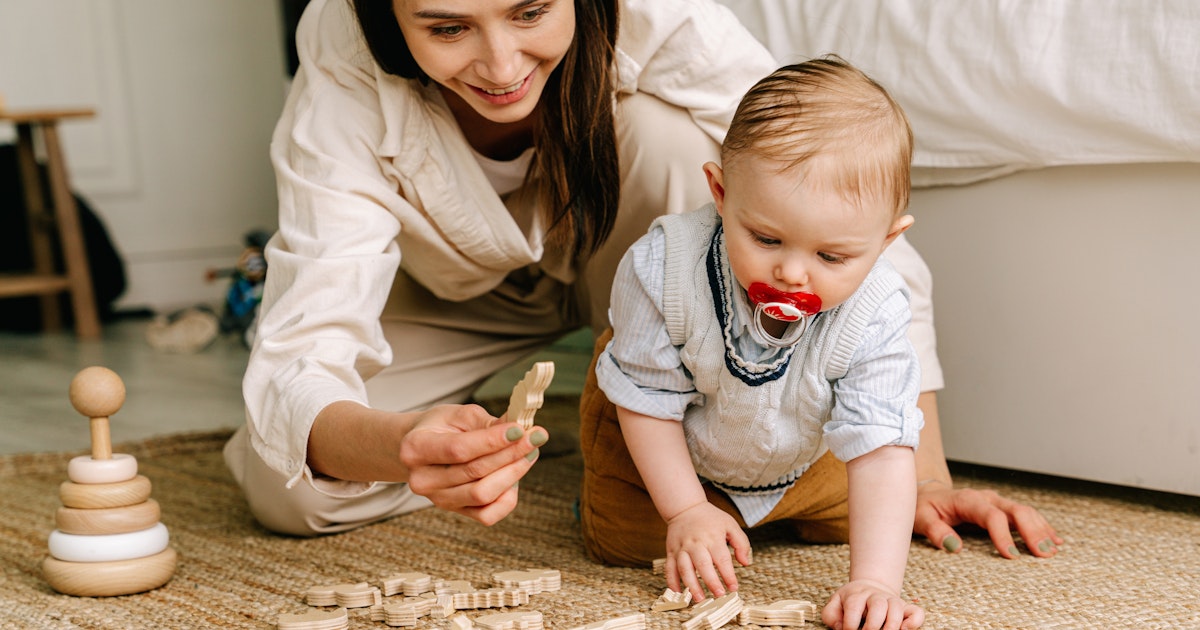
The best toys for young children are the ones that invite adult participation — pointing, naming, imitating. Toys that prompt shared conversation between caregiver and child build vocabulary faster than any passive toy can. Look for toys that give parents and children something to talk about together.
Our Top Picks
StackLearn Classic Nesting Cups (12–18 months)
Best for: Early cause-and-effect exploration and simple spatial reasoning
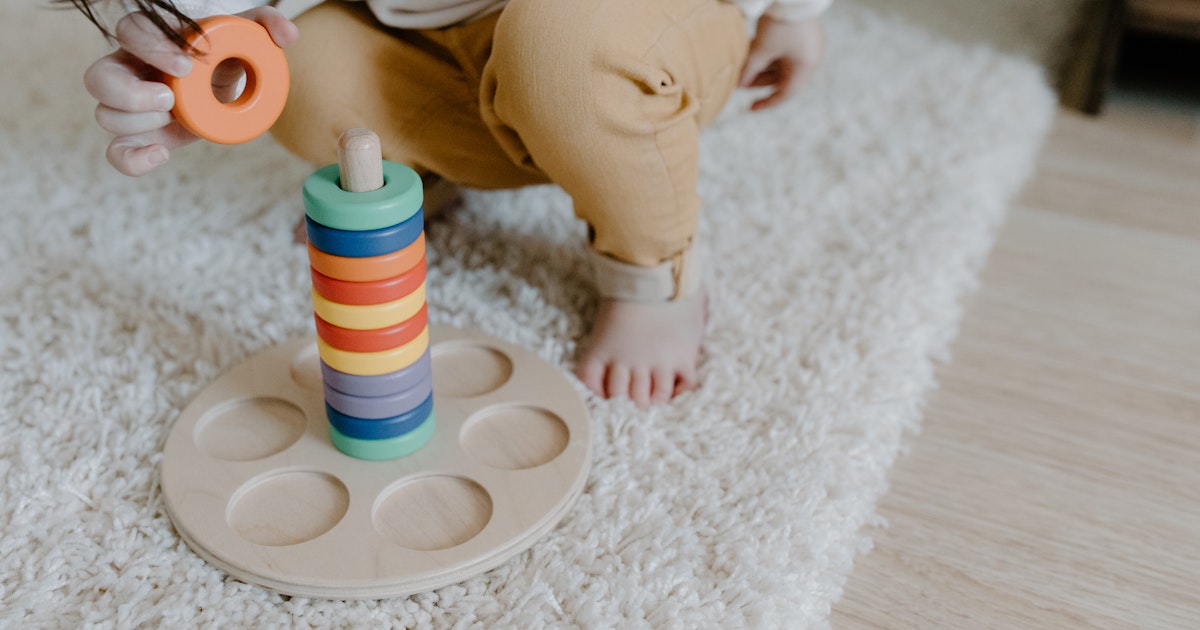
Eight stackable cups in graduated sizes. They nest inside each other, stack into a tower, and can be used for water and sand play. Simple, durable, and one of the most consistently recommended starter toys by child development specialists.
- Promotes understanding of relative size and containment
- Can be used in bathtub, sandbox, or as building blocks
- Bright contrasting colors support early color differentiation
Drawback: Very basic — some parents feel underwhelmed purchasing something so simple
Price range: $12–$20
PlayWise Shape Sorter Cube (12–24 months)
Best for: Shape recognition, hand-eye coordination, and early problem solving
A classic toy with a modern update: this version has larger, easier-to-grip shapes and a removable lid for self-resetting the game. Children learn that shapes have properties, that orientation matters, and that persistence produces results.
- Nine distinct shapes including familiar geometrics
- Sized appropriately for small hands with safety dimensions
- Removable lid allows child to empty and restart independently
Drawback: Some children master it quickly and lose interest within a few weeks
Price range: $18–$28
TalkShape Animal Sound Puzzle (18–30 months)
Best for: Vocabulary building and fine motor skill development through puzzle work
A wooden puzzle featuring six animals, each played in a corresponding animal sound when placed correctly. Combines the benefits of puzzle-solving with sound-based language reinforcement.
- Each piece uniquely shaped to match its slot
- Realistic animal sounds support vocabulary building
- Sturdy wooden pieces with safe natural finish
Drawback: Requires batteries; volume is not adjustable on all versions
Price range: $22–$35
BuildBlock Soft Start Set (12–18 months)
Best for: First-time builders who need large, safe blocks that don't hurt when mouthed or knocked over
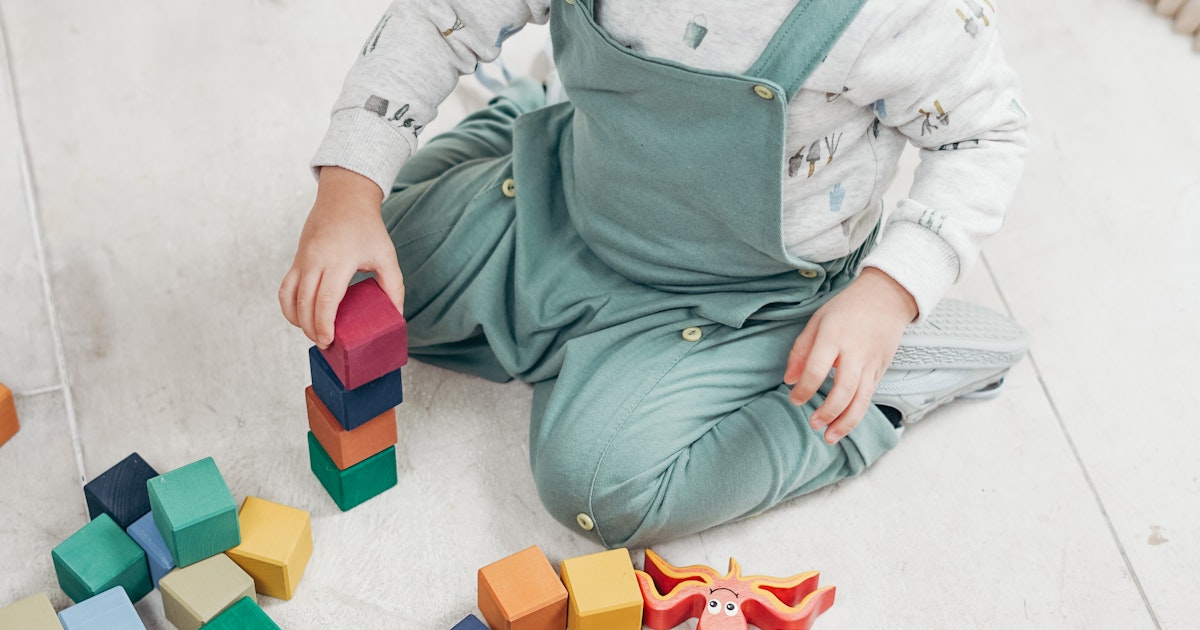
Oversized foam blocks with fabric covers that stack safely, support early building concepts, and pose no injury risk when the inevitable tower-toppling happens. Multiple cover textures support tactile sensory development.
- Oversized dimensions appropriate for smallest builders
- Washable covers
- Interlocking soft base prevents early frustration with sliding
Drawback: Transitions to harder materials should happen by 18–24 months as fine motor control improves
Price range: $30–$45
DrawTrace Beginnings Art Kit (24–36 months)
Best for: Early mark-making, creative expression, and fine motor control for pre-writing skills
A washable crayon and large-format paper kit designed for the grip development stage. The chunky crayons fit developing palmar grasps before children develop a pincer grip. Includes simple trace templates that build toward letter recognition at 30+ months.
- Extra-thick crayons sized for toddler grip
- Includes reusable wipe-clean tracing boards
- Washable on most surfaces (including walls)
Drawback: Art supplies require adult supervision for youngest users
Price range: $18–$30
RolePlus Kitchen Starter Set (24–36 months)
Best for: Imaginative play, social role-modeling, and early language development through imitation
Pretend play kitchens consistently rank among the highest-rated toddler toys by developmental specialists because they encourage imitation of real-world adult behavior, which builds social understanding and language. This compact version includes a stove, sink, utensils, and play food pieces.
- Compact footprint compared to full-size play kitchens
- Durable plastic with tactile food pieces featuring realistic textures
- Plays pretend water sounds and cooking effects on the stove
Drawback: Food pieces are small enough to require supervision with younger 24-month-olds
Price range: $55–$90
Comparison Table
| Toy | Best Age | Skill Target | Open-Ended? | Durable | Price |
|---|---|---|---|---|---|
| StackLearn Nesting Cups | 12–18 mos | Spatial/sorting | Yes | Yes | $12–$20 |
| PlayWise Shape Sorter | 12–24 mos | Shape/fine motor | Limited | Yes | $18–$28 |
| TalkShape Animal Puzzle | 18–30 mos | Language/motor | No | Yes | $22–$35 |
| BuildBlock Soft Set | 12–18 mos | Sensory/building | Yes | Yes | $30–$45 |
| DrawTrace Art Kit | 24–36 mos | Pre-writing/creative | Yes | Medium | $18–$30 |
| RolePlus Kitchen Set | 24–36 mos | Imaginative play/language | Yes | Yes | $55–$90 |
Frequently Asked Questions
Child development research consistently suggests that fewer, higher-quality toys outperform large collections of low-quality options. Having too many toys can reduce attention span and creative engagement. Rotating a smaller set — keeping eight to twelve accessible at a time and swapping others in and out — often produces more focused, sustained play than maintaining an overwhelming playroom inventory.
Most major pediatric guidelines recommend minimal screen time before age two, and this caution generally extends to screen-embedded toy tablets. At this age, the most powerful learning happens through hands-on physical manipulation of real objects and through language-rich interaction with caregivers. Screen-based toys in this age range tend to produce passive consumption rather than active development.
Meaningful fine motor skill development requires toys that demand increasingly precise hand-eye coordination: puzzles where fit matters, stacking where balance matters, drawing tools that require controlled pressure. Toys that respond equally to any type of manipulation — mashing buttons, rolling, or shaking — produce less targeted fine motor engagement.
In general, no. Giving a 14-month-old a toy designed for three-year-olds produces frustration, not accelerated learning. Development follows a sequence that can't meaningfully be skipped. Toys at or slightly above current ability — the "zone of proximal development" — are most productive.
Wooden toys don't inherently produce better developmental outcomes. However, they're more likely to be open-ended, more durable, less likely to contain harmful materials, and less likely to have features that produce passive engagement. Many of the most recommended developmental toys happen to be wooden, but the material itself is not the determining factor.
Final Verdict
The best toddler toys match what your child's nervous system is ready to do — and challenge it just enough to produce engagement without frustration.
- Ages 12–18 months: Focus on sensory input and cause-and-effect with StackLearn Nesting Cups and BuildBlock Soft Set
- Ages 18–24 months: Add structured problem-solving with PlayWise Shape Sorter and word-building with TalkShape Animal Puzzle
- Ages 24–36 months: Expand into creative and social play with DrawTrace Art Kit and RolePlus Kitchen Set
Simplicity, durability, and adult engagement are more predictive of a toy's educational value than any marketing claim on the box.
Learn how we evaluate products in this category: Our Parenting Testing Methodology
About the author
Chief Editor
The Nanozon Insights team researches, tests, and reviews products across every category to help you make smarter buying decisions.